
 by
by Cancelled sailings to Sweden – Unity Line switches to truck check-in without reservations
Unity Line has announced further cancellations of scheduled ferry sailings between Świnoujście and ports in Sweden (Trelleborg, Ystad) due to difficult weather conditions.
❌ Cancellations still scheduled for today, 3 February
According to the shipowner’s announcement, the following sailings have been cancelled due to adverse weather conditions:
19:20 – m/f Galileusz from Ystad
20:30 – m/f Jantar Unity from Świnoujście
In addition, for technical reasons, the following sailing of m/f Epsilon has been cancelled:
24:00 – from Trelleborg
❌ Planned cancellations on 4 February
01:30 – m/f Copernicus from Świnoujście
10:15 – m/f Jantar Unity from Trelleborg
15:00 – m/f Copernicus from Trelleborg
Due to storm conditions and the accumulation of heavy goods vehicles awaiting loading, Unity Line has decided to suspend the cargo reservation system in Poland until further notice. Trucks are being checked in according to the order of arrival at the terminal, and drivers should report directly to the Ferry Office.
✔️ All vehicles with confirmed reservations for cancelled sailings will be transported on other vessels within the Unity Line network, subject to weather conditions and available capacity.
✔️ The shipowner reserves the right to introduce further schedule changes and cancellations, which will be communicated in separate announcements.
✔️ Carriers and drivers should contact Unity Line offices at the terminals directly for the latest information on crossings and available transport options.
 by
by Bonn-Nord Bridge closed to heavy goods vehicles from 9 February
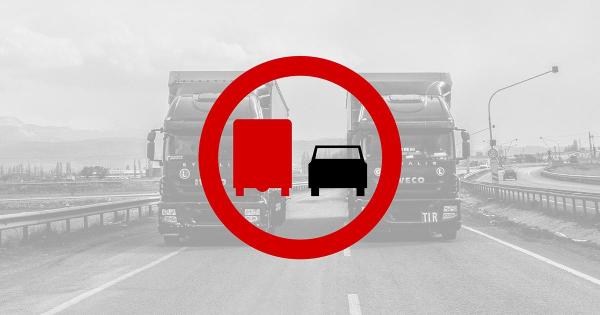
From 9 February 2026, hauliers travelling through Bonn will have to take into account significant changes to traffic organisation. The Bonn-Nord Bridge on the A565 motorway will be closed to vehicles with a gross vehicle weight rating (GVWR) exceeding 7.5 tonnes, resulting in detours and longer journey times in one of the most heavily congested areas of North Rhine-Westphalia.
The decision was confirmed on 19 January during a joint traffic management meeting attended, among others, by representatives of the City of Bonn, the Rhein-Sieg district and the Cologne regional authorities. On 9 February, appropriate road signage will be installed in the vicinity of the bridge. In addition, the newly introduced ban will be announced via digital traffic information boards (dWiSta) located on motorways over a wide radius around Bonn. The restriction will apply to all vehicles with a GVWR exceeding 7.5 tonnes. Exemptions apply to emergency services vehicles, the fire brigade, infrastructure maintenance services, civil defence units and civil protection services. All other heavy vehicles will be required to use the designated diversion routes.
The authorities have agreed on a temporary exemption for school buses. Traffic by these vehicles will be permitted until the end of the 2025/2026 school year. The decision was justified by the small number of daily journeys and the clearly defined duration of the exemption.
The Bonn-Nord Bridge was opened to traffic in 1967. The structure has two lanes in each direction as well as turning lanes. More than 100,000 vehicles cross it every day, around 5% of which are heavy goods vehicles. As infrastructure operators emphasise, the bridge was designed for significantly lower loads, and its age and technical condition mean that it no longer meets the requirements of modern and future traffic, particularly with regard to heavy transport. Hauliers operating routes through North Rhine-Westphalia should take these changes into account when planning their routes already at the beginning of February.

 by
by RN20 France–Andorra closed for weeks
The main route linking France with Andorra, RN20, is impassable on the Ax-les-Thermes – Mérens-les-Vals section following a serious rockslide on 31 January.
Approximately 100 m³ of rock fell onto the road from a height of around 250 m, destroying about 100 metres of carriageway. Due to the risk of further rockfalls, the poor condition of the road and unfavourable weather conditions, the Prefecture of the Ariège department has officially extended the closure “until further notice and most likely for several weeks”.
RN20 is the main access road from France to Andorra and is regularly used by heavy goods vehicles carrying out destination traffic (deliveries, loading/unloading).
The current closure of RN20 means that heavy goods vehicles are unable to pass in either direction. The designated diversion route is not accessible to trucks. As a result, road deliveries to Andorra are severely disrupted or impossible.
Transport operations must therefore be:
– postponed,
– reoranised (rail transport combined with local distribution),
– or rerouted via Spain (longer and more costly).
 by
by Fréjus Tunnel: Night Closures February 9–28, Delays Up to 45 Minutes
Drivers traveling between France and Italy should expect nighttime traffic stoppages in the Fréjus Tunnel. A series of short closures related to maintenance work is scheduled for February. In most cases, traffic will be halted for 30–45 minutes, mainly during nighttime hours.
The planned closures in February are for nighttime, short-term traffic interruptions in the France-to-Italy direction. The pauses in traffic will allow technical work to be carried out, such as the installation and removal of signage and infrastructure maintenance, while maintaining full safety standards.
Scheduled closures:
• February 9–14 – night pauses from 22:30 to 23:15, and on selected days also from 04:30 to 05:15
• February 16–21 – closures at the same nighttime hours
• February 23–28 – closures at the same nighttime hours
In most cases, traffic stoppages will not exceed 30–45 minutes. While they may cause minor delays for nighttime transport, their impact on overall traffic flow is expected to be minimal.
 by
by Floods Paralyze Andalusia – 186 Roads Affected
Heavy rainfall and the aftermath of successive storms in southern Spain continue to paralyze the road network in the Andalusia region. Data from road authorities and the latest reports indicate extreme transport disruptions, directly impacting road traffic, logistics, and supply chains.
Many local and regional routes are closed to traffic, hampering truck and delivery access, particularly in the provinces of Cádiz, Jaén, Málaga, and Sevilla. Infrastructure problems are exacerbated by waterlogged soil, causing landslides and road collapses, which pose serious safety risks. The situation is severe enough that transit and distribution traffic is being forced to take detours and longer routes, affecting travel times and operational costs.
According to the latest data from the Dirección General de Tráfico (DGT) and the Junta de Andalucía, a total of 186 roads in Andalusia are affected by heavy rain and flooding. The provinces most impacted are:
• Cádiz – 65 roads
• Córdoba – 31 roads
• Granada – 26 roads
• Jaén – 21 roads
• Sevilla – 18 roads
• Málaga – 16 roads
• Huelva – 7 roads
• Almería – 2 roads
Key routes facing severe disruptions:
⭕ A-48 near Vejer de la Frontera (Cádiz) – closed toward Tarifa, with the main transport section in the area impassable.
⭕ A-44 near Campillo de Arenas (Jaén) – road cut off, hindering connectivity toward Granada.
⭕ A-32 between Villacarrillo and Albacete – also closed, affecting freight transport flow.
⭕ A-373 in Prado del Rey (Cádiz) – major subsidence and road collapse; section completely impassable.
⭕ A-374 in the Serranía de Ronda area – multiple sections damaged or closed due to landslides and cracks in the pavement.
⭕ Local roads such as MA-7402, MA-8306, and others in the Genal and Guadalteba valleys remain closed due to mud and flooding.
Weather Warnings
◾ Orange Alert (significant risk) by Aemet is in effect in the Grazalema comarca (Cádiz) until 20:00, with expected rainfall of up to 150 liters/m² in 24 hours.
◾ Yellow Alerts (low risk) are in effect in: Ronda (Málaga), Estrecho (Cádiz), Nevada and Alpujarras (Granada), Cazorla and Segura (Jaén).
◾ Yellow Alerts also apply to winds up to 70 km/h in the comarcas of Valle del Almanzora, Los Vélez, Nacimiento, Campo de Tabernas, Poniente, Capital, and the Costa de Granada.
◾ On the Poniente coast and Almería, in the Estrecho (Cádiz) and Costa de Granada, yellow coastal warnings are also active, with winds up to 60 km/h (force 7) and waves up to 3 meters.
 by
by Norway confiscates driver cards, questioning the legality of their issuance
Norway has begun detailed inspections of driver cards issued in other EU countries, verifying whether they were issued in accordance with the “normal place of residence” principle. In practice, during inspections, the driver’s responses are decisive – one statement can result in the card being confiscated and the truck immobilized.
In recent weeks, Norwegian supervisory authorities have implemented guidelines requiring officials to verify the correctness of driver card issuance in the context of meeting the condition of so-called normal residence. It is no longer just a matter of checking whether the card is valid and technically functional. The check now includes an analysis of whether the card was issued in accordance with Article 26 of Regulation (EU) No 165/2014, and in particular whether the driver actually had his normal place of residence in the country of issue. In practice, this means that not only the documents are crucial, but also the driver’s answers during the roadside check. In fact, the driver’s answer is decisive…
1. Classification – suspicion of issuing a card on the basis of false statements
In one of the recent checks, the Norwegian police classified the case as: “Use of a tachograph, driver card or chart – H5 Driving with a driver card obtained on the basis of false statements and/or forged documents (MSI). The driver was driving a vehicle using a driver card issued in Poland, but stated that he had a residential address in Belarus. In addition, he indicated that he had access to accommodation (a staff room) provided by his employer in Poland.
Reference: Regulation (EU) No 165/2014, Articles 26 and 27.”
The H5 classification alone indicates that the control authority made a preliminary assumption that the card could have been issued in violation of the rules on normal residence.
This assessment was not based on the lack of documents, but on the content of the driver’s statement.
2. Guidelines issued to the Norwegian police
During the conversation with the officer, it was established that for about two weeks, the Norwegian police have been required to check the correctness and legality of driver card issuance.
This means that:
– this verification is not incidental,
– it is part of a broader control practice,
– officers analyse the compliance of the card issue with Article 26 of Regulation 165/2014.
In practice, the police check whether the driver had a normal place of residence in Poland or only a place to stay related to their employment.
3. Article 26 of Regulation 165/2014 is of key importance
❌3.1. Card only in the country of normal residence
Article 26(1) states:
‘Driver cards shall be issued, at the request of the driver, by the competent authority of the Member State where the driver has his normal residence. They shall be issued within one month of the receipt by the competent authority of the request and all necessary documentation.’
❌3.2. Definition of ‘normal residence’
According to Article 26(2):
‘‘’Normal residence’ means the place where a person usually lives, that is for at least 185 days in each calendar year, because of personal and occupational ties, or, in the case of a person with no occupational ties, because of personal ties which show close links between that person and the place where he is living.
However, the normal residence of a person whose occupational ties are in a place different from their personal ties and who consequently lives in turn in different places situated in two or more Member States shall be regarded as being the place of their personal ties, provided that such person returns there regularly. This last condition need not be complied with where the person is living in a Member State in order to carry out a fixed-term assignment.”
In practice, this means that:
– employment in Poland is not sufficient,
– the provision of accommodation or a place of residence by the employer does not constitute the centre of personal or economic interests,
– real personal ties and actual residence in Poland are crucial.
❌ 3.3. Issuing a card on the basis of false statements
Article 26(7) of Regulation 165/2014 provides that a card may be withdrawn or suspended if it was issued on the basis of false statements or forged documents.
It is this legal construct that is referred to in the Norwegian H5 classification adopted in the control protocol.
4. The A1 document is not decisive
In the case under analysis, the driver had an A1 document, but the officer did not consider it decisive. Due to the driver’s statement that he was a resident of Belarus, the police assumed that the driver only had accommodation in Poland and did not have a normal residence within the meaning of Article 26 of the aforementioned regulation. In current inspection practice, the A1 document does not replace the analysis of the actual centre of personal or economic interests.
5. Effects of the inspection – real operational risk
In the case in question:
– the driver was unable to continue driving,
– it was necessary to replace him with another driver,
– the driver card was retained and will be sent back to the issuing authority in Poland.
This means a direct risk of vehicle immobilisation and disruption to transport operations.
6. Recommended actions for entrepreneurs
In light of current Norwegian practice, the following is recommended:
1. Urgent training of drivers on the consequences of their answers to officers during inspections – the driver’s statement may be decisive.
2. Standardisation of documentation confirming normal residence in Poland, including the replacement of foreign documents (e.g. driving licences) with Polish ones.
3. Verification of the compliance of the driver’s actual situation with the declarations made when the card was issued.
4. In justified and exceptional cases – consideration of the application of Article 26(4), i.e. a temporary driver card as a transitional solution.
7. Final conclusions
The current practice in Norway clearly shows that checking a driver card is no longer just a technical procedure. It has become part of the process of verifying the legality of its issue and the driver’s actual place of normal residence.
Under the current guidelines:
– a card issued in Poland may be questioned,
– the A1 document is not decisive,
– the driver’s answers during the check are crucial,
– inconsistencies between the documentation and the oral declaration may result in the card being retained and a ban on further driving.
In practice, this means that one careless statement during an inspection can lead to the immediate suspension of transport and the initiation of a verification procedure in the country where the card was issued.
It is therefore worth taking a look at the current situation of drivers and the documents they hold. An inspection is not only a matter of avoiding administrative sanctions, but above all a real risk of transport being suspended, the driver card being retained and a verification procedure being initiated in the country of issue, which in practice can lead to operational paralysis of the company and loss of contracts.
In the current market reality, any inconsistency between the documentation and the driver’s actual life situation may be classified as the issue of a card based on false statements, and the consequences of such a classification go far beyond a roadside check.
For this reason, we recommend conducting a documentation audit of drivers and verifying that they meet the conditions for normal residence within the meaning of Article 26 of Regulation 165/2014. Early analysis allows you to reduce the risk of your vehicle being detained abroad and avoid disputes with the authorities of the country that issued the card.
In case of doubt as to the status of a particular driver or the need to implement corrective measures, it is advisable to seek professional legal advice to assess the risk and prepare the company for a possible inspection in accordance with the current practice of the Norwegian authorities.
 |
Author: Marek KliśLegal Advisor |
by A4 in the Netherlands with restrictions – Beneluxtunnel to be closed at night
Recurring maintenance works in the Beneluxtunnel under the Nieuwe Maas will reduce capacity on one of the key transport corridors in western Netherlands, potentially leading to delays in container and intermodal transport.
In 2026, cyclical night-time closures related to routine infrastructure maintenance are scheduled in the Beneluxtunnel on the A4 motorway. For carriers operating to and from the ports of Rotterdam, this means the need to factor in detours and extended transit times.
The A4 is one of the main transport arteries in western Netherlands. It connects the area of The Hague with the Rotterdam metropolitan region and constitutes a vital corridor for container transport, intermodal operations, and regional distribution across the Benelux area. The Beneluxtunnel, running beneath the Nieuwe Maas, is a critical bottleneck on this route. Any reduction in capacity directly affects heavy goods vehicle traffic flow.
Closure schedule – direction Rotterdam/ Pernis
On the following dates, one tunnel tube will be closed in the direction of Pernis/Rotterdam Hoogvliet (always between 21:00 and 05:00):
• 16/17 February (Tube B)
• 17/18 February (Tube A)
• 20/21 February (Tube B)
• 4/5 May (Tube B)
• 5/6 May (Tube A)
• 31 August / 1 September (Tube B)
• 1/2 September (Tube A)
• 16/17 November (Tube B)
• 17/18 November (Tube A)
Closure schedule – direction The Hague
Closures of one tunnel tube in the direction of The Hague (mainly 21:00–05:00):
• 18/19 February (Tube E)
• 19/20 February (Tube D)
• 20/21 February (Tube D – until 22:00)*
• 2/3 March (Tube E)
• 6/7 March (Tube E)
• 6/7 May (Tube E)
• 7/8 May (Tube D)
• 5/6 June (Tube D – until 22:00)*
• 28/29 August (Tube D)*
• 2/3 September (Tube E)
• 3/4 September (Tube D)
• 13/14 November (Tube D)*
• 18/19 November (Tube E)
• 19/20 November (Tube D)
* On selected dates, due to works in the Ketheltunnel (A4), Tube D of the Beneluxtunnel towards The Hague will additionally be closed, which may increase traffic pressure on alternative routes.
Although one tube will remain open in each direction, overall capacity will be reduced and traffic will be channelled through narrowed lanes. In practice, this means that when planning night-time transport operations in the Rotterdam–The Hague region, it is advisable to check current traffic advisories before entering the Netherlands.
 by
by Transit through Hungary – Designated Routes Only and Strict Document Control
Periodic truck traffic bans apply in Hungary; however, not all transport operations are covered by these restrictions. During the season from 4 November to 1 March, international transport operations performed by vehicles meeting at least the EURO 4 emission standard are exempt from the restrictions, provided that designated transit corridors are used. As of 1 January 2026, new rules concerning the movement of vehicles with a gross vehicle weight exceeding 20 tonnes have also entered into force.
Although periodic truck bans apply in Hungary, they do not cover all transport operations. Between 4 November and 1 March, an important exemption applies. During this period, the bans do not apply to international transport carried out by vehicles complying with at least the EURO 4 emission standard. However, this does not mean full freedom of movement. Vehicles are still required to use designated transit corridors only.
From 1 January 2026, new regulations governing the movement of heavy goods vehicles have also come into effect, both with regard to transit and non-transit operations. For Polish carriers, these regulations are of particular importance, as Hungary remains one of the key transit countries on routes to Romania, Bulgaria, Greece and Turkey. In practice, this means that routes must be planned strictly in accordance with the official transit road network, and transport documents must clearly confirm the transit nature of the operation.
TRANSIT
One of the objectives of the new regulations is to ensure that heavy goods vehicles engaged in international transit traffic (crossing the Hungarian state border), with a gross vehicle weight exceeding 20 tonnes and without a destination within the territory of Hungary, may travel exclusively on routes specified by law.
The transit road network consists of corridors connecting border crossing points, largely based on motorways and expressways, and in justified cases also on officially designated urban routes. These routes are marked with the symbol “T” and a number corresponding to the sector-based road numbering system.
An official map of the Hungarian transit routes for heavy goods vehicles can be found, among others, on the website trafficban.com trafficban.com – Hungary – Detailed info.
Leaving the transit route only in exceptional cases. The regulations allow leaving a designated transit route only within a very limited scope:
● solely for the purpose of taking a mandatory rest period, and
● exclusively to a parking area that can be reached without passing through a residential area.
 Note: During inspections, transport documents must clearly confirm that neither the consignor nor the consignee is located within the territory of Hungary. An explanation such as “the navigation system directed me this way” is not considered a mitigating circumstance. Any deviation from the designated route entails the risk of a fine.
<h2<NON-TRANSIT TRAFFIC (vehicles above 20 tonnes GVW and below 20 tonnes GVW)
Vehicles with a gross vehicle weight exceeding 20 tonnes may use roads outside the transit route network only to the extent strictly necessary if they are travelling:
● to a base (registered office) located within the territory of Hungary, or
● to a loading or unloading point within the territory of Hungary, as indicated in the transport documents.
The obligation to use designated transit routes does not apply to:
● vehicles with a GVW of up to 20 tonnes,
● vehicles with a GVW exceeding 20 tonnes engaged in international transport that have their place of loading or unloading within the territory of Hungary (loading point, unloading point, combined transport terminal, base).
An exemption from the above rules also applies when the vehicle operates within the same county in which its place of destination or origin is located:
● in connection with loading or unloading,
● in the case of specially equipped vehicles – to or from the place of work,
● to or from the company’s base.
In such cases, the vehicle is entitled to use the route necessary to perform the specific task.
 by
by France introduces truck driving ban in 38 departments. From Wednesday 4:00 a.m.
The French Minister of Transport, Philippe Tabarot, has announced a temporary ban on heavy goods vehicles in 38 departments due to severe winter weather conditions. The restrictions will come into force on Wednesday from 4:00 a.m.
The ban covers a wide area from the Charente department to the Belgian border, including Centre-Val de Loire and the Île-de-France region. According to weather forecasts, 3–7 cm of snow is expected across most affected departments, with up to 15 cm in the Ardennes. Road conditions are expected to deteriorate rapidly, particularly during the morning hours.
The decision follows a series of serious road accidents linked to the winter weather. Since the start of the snow episode, at least seven fatalities have been reported on roads in regions including Île-de-France, Brittany and Landes.
⚠️ Important for drivers:
• The ban applies to heavy goods vehicles (local exceptions may apply).
• On the A63 motorway, traffic towards the France–Spain border remains suspended.
• Drivers are advised not to plan transit through the affected departments during the ban period.
The situation remains dynamic and restrictions may be extended or expanded depending on weather developments.
 by
by France: exemptions from truck bans in Normandy and western regions. Closures, restrictions and liftings
French prefectures have introduced exemptions from Sunday bans on heavy goods vehicles over 7.5 tonnes in Normandy and western France. At the same time, road closures, speed restrictions and overtaking bans are in force in many departments.
Exemptions from the traffic ban – Normandy
The Normandy Prefecture has issued an order lifting the traffic ban on heavy goods vehicles over 7.5 tonnes GVW used for road freight transport in all departments of the region: Calvados (14), Eure (27), Manche (50), Orne (61), Seine-Maritime (76).
The exemption applies:
• Saturday, 10 January 2026 from 22:00 to 24:00,
• Sunday, 11 January 2026 from 00:00 to 16:00.
Western France – exemption for animal feed transport
A temporary exemption from the traffic ban has also been granted for heavy goods vehicles over 7.5 tonnes GVW transporting animal feed. The decision covers all departments of the so-called western defence zone: Brittany, Normandy, Centre-Val de Loire and Pays de la Loire.
The exemption applies:
• from Saturday, 10 January 2026 at 22:00,
• until Sunday, 11 January 2026 at 22:00.
Road bans and closures
Pyrénées-Orientales (66)
Due to difficult weather conditions in mountainous areas:
• RN320 (L’Hospitalet – Col du Puymorens – Andorra) and RN22 (access to Andorra) – truck traffic ban from Friday, 9 January at 17:00,
• from 18:00, the same sections are completely closed in both directions to all vehicles,
• RN20 (Foix – Ur) – truck traffic ban from 17:00.
Haut-Rhin (68)
Closure of passes in the Alsatian Vosges to vehicles with a GVW over 3.5 tonnes. Passage is possible only via the Maurice Lemaire Tunnel (A4).
Valid from Friday, 9 January at 18:00 until Monday, 12 January.
Lozère (48)
Traffic ban for articulated heavy goods vehicles:
• on RN88 between Mende and the border with the Ardèche department,
• on the road network east of RD806 and north of RD901.
Valid on 9 January from 12:00 to 19:00.
RN134 – direction Spain
Truck traffic ban between Gurmençon and the Somport Tunnel and the Spanish border, except for local transport.
Speed and overtaking restrictions
• Côtes-d’Armor (22) and Finistère (29) – overtaking ban and speed limit reduced to 20 km/h.
• Mayenne (53) – speed reduced by 20 km/h and overtaking ban for vehicles over 3.5 tonnes.
• Somme (80) – speed restrictions for all vehicles and overtaking ban for trucks over 3.5 tonnes on secondary roads (from 8 January until Friday 23:00).
• Sarthe (72) – speed reduced by 20 km/h and overtaking ban for vehicles over 3.5 tonnes (from 8 January at 18:00 to 9 January at 12:00).
• Northern France (Aisne, Nord, Oise, Pas-de-Calais, Somme) – speed limits:
➡️ 110 km/h on motorways (normally 130 km/h),
➡️ 90 km/h on roads and expressways (normally 110 km/h).
Lifting of bans
• Seine-Maritime (76) – reopening of the Tancarville Bridge,
• Calvados (14) – lifting of the traffic ban for vehicles over 7.5 tonnes and on the Normandy Bridge and Grand Canal viaduct,
• Manche (50) – lifting of the traffic ban,
• Vosges – traffic restored on RN66 – Col de Bussang,
• Loire (42) and Puy-de-Dôme (63) – lifting of the ban on the A89.