 by
by Liechtenstein: 24-hour truck traffic ban on March 19
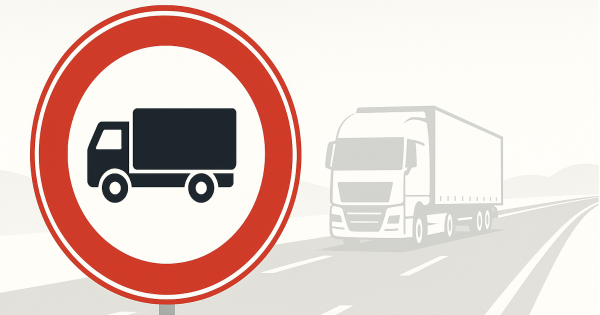
On March 19, a 24-hour traffic ban for heavy goods vehicles will be in force in Liechtenstein. The restriction has been introduced due to St. Joseph’s Day, which is celebrated on that date. The ban will apply from 00:00 to 24:00 on all roads in the country.
The restriction mainly concerns vehicles used for freight transport, in particular heavy motor vehicles with a gross vehicle weight exceeding 3.5 tonnes, commercial tractors and trucks over 3.5 tonnes GVW, motor vehicles with a semi-trailer where the total weight of the combination exceeds 5 tonnes, and vehicles towing a trailer with a GVW exceeding 3.5 tonnes.
Regardless of holidays and Sundays, Liechtenstein also has a permanent night-time truck traffic ban. It applies to the same categories of vehicles and is in force daily from 22:00 to 05:00.
As in many European countries, limited exemptions from the ban are provided. These may include, among others, the transport of perishable food products, the transport of animals, and transports carried out in urgent situations or for technical reasons.

 by
by Germany to demolish old viaduct. A7 will be closed in both directions
The A7 motorway in Hesse will be completely closed for six hours due to the planned demolition of the old Talbrücke Thalaubach bridge structure. On March 15, traffic between the Dreieck Fulda interchange and Bad Brückenau-Volkers will be stopped in both directions, and drivers should expect detours and disruptions on one of Germany’s key north–south transport corridors.
Autobahn GmbH des Bundes has announced important traffic changes on the A7 motorway related to the next stage of work on the replacement construction (Ersatzneubau) of the Talbrücke Thalaubach in the Eichenzell-Döllbach area (Hesse). The project involves the complete replacement of the outdated bridge structure from 1968, which has already been partially replaced with one new carriageway. The next step is the demolition of the old structure.
On March 15, 2026 (Sunday) at 11:00, the demolition of two old sections of the Talbrücke Thalaubach viaduct over the A7 and B279 is planned using explosives. For this reason, the A7 motorway will be completely closed in both directions between Dreieck Fulda and Bad Brückenau-Volkers from 10:00 to 16:00.
Autobahn GmbH has provided official diversion routes:
❌ Southbound (Würzburg): from Dreieck Fulda via A66 to Fulda Süd, then along regional roads through Rothemann, Döllbach, Motten, Kothen and Speicherz to Bad Brückenau-Volkers.
❌ Northbound (Kassel): diversion in the opposite direction along the same route.
On March 15 a 300-metre safety zone will be established around the detonation site, where the presence of people will be prohibited throughout the operation.
The B279 federal road, which runs beneath the old bridge structure, has been closed since March 2 until approximately April 2 to protect the road surface and allow the construction of a special sand protection platform before the demolition.
 by
by Truck drivers will see new signs near the Dutch border
Truck drivers entering the Netherlands may notice new large information signs near the borders. The signs remind carriers about the planned introduction of a kilometre-based road charge for trucks, which will come into force in mid-2026.
Large information boards aimed at truck drivers have appeared at several border crossings. Their purpose is to draw the attention of transport companies to upcoming changes in the road charging system and to remind them that from 1 July 2026 a new kilometre-based toll for trucks will apply in the country.
The signs have been installed, among others, along border sections of motorways leading from Germany and Belgium, where truck traffic is particularly heavy. Their main purpose is to reach foreign transport companies that regularly enter the Netherlands and may not follow regulatory changes closely.
The new system will apply to trucks with a gross vehicle weight above 3.5 tonnes. The charge will be calculated for each kilometre driven on Dutch motorways as well as on parts of national and regional roads. The rate will mainly depend on the vehicle weight and CO₂ emission class.
With the introduction of the new toll, the Netherlands will abolish the current Eurovignette system. At the same time, road tax for trucks registered in the country is expected to be reduced in order to partly offset the new charges.
Authorities stress that the new system will bring the Netherlands closer to models already used in many European countries, where trucks pay according to the kilometres actually driven. The goal is also to encourage carriers to use lower-emission vehicles and reduce the environmental impact of road transport.
The large signs placed at the borders are part of an information campaign launched before the system becomes operational. They are intended to remind drivers and transport companies that from mid-2026 driving trucks on Dutch roads will involve a new kilometre-based charge.
 by
by Romania closes an important route through the Carpathians. Restrictions for trucks on DN7
Long-term traffic restrictions have been introduced on one of the key transport routes crossing the Carpathians in Romania. From 16 March to 15 June 2026, daily closures for trucks and periodic disruptions for other vehicles will apply on national road DN7 between Râmnicu Vâlcea and Veștem due to slope stabilization works.
The information was provided by the INFOTRAFIC Center of the Romanian General Inspectorate of Police, which stated that the decision was made with the joint agreement of the road administration and the infrastructure operator.
During the works, traffic for vehicles with a gross vehicle weight above 7.5 tonnes will be completely closed on the DN7 section between Râmnicu Vâlcea and Veștem. The ban will apply from Monday to Saturday between 08:00 and 17:30. During this time, freight transport will have to use designated detour routes.
Detours for heavy transport
➡️ Bucharest – Veștem (and return)
Detour route:
Bucharest → A3 → Ploiești → DN1A → Brașov → DN1 → Veștem (junction with DN7)
➡️ Bucharest – A1 Simeria (Nădlac II / Cluj) and return
Detour route:
Bucharest → A1 → Pitești → DN7 → Râmnicu Vâlcea → DN67 → Târgu Jiu → DN66 → Simeria → A1 motorway junction
On the sections Râmnicu Vâlcea → work area and Sibiu/Boița → work area, traffic will continue according to the applicable regulations.
Vehicles with a GVW up to 7.5 tonnes will also face disruptions. On sections under construction, between Căciulata and Câinenii Mari in Vâlcea county, traffic may be temporarily stopped or restricted during the same hours (08:00–17:30, Monday–Saturday). During works, especially when removing rock debris from the roadway, traffic will periodically be directed alternately in one lane under traffic control supervision.
During the most dangerous operations, such as removal of rock blocks or slope cleaning, the road will be temporarily closed for short periods:
– up to 30 minutes from Monday to Friday,
– up to 15 minutes on Saturdays.
After each closure, traffic will be restored depending on current traffic conditions.
Works will cover the following sections:
– km 198+200 – 207+000
– km 216+000 – 219+000
– km 224+000 – 227+300
– km 228+000 – 233+200
The works include:
– cleaning and cutting of rocky slopes,
– removal of unstable rock blocks,
– installation of anchored safety nets,
– installation of drilled anchors,
– repair or replacement of gabion structures,
– construction of drainage systems.
The road administrator also announced that restrictions will not be introduced on Sundays, public holidays, or the days preceding holidays, unless urgent safety works are required.
 by
by Four weekends of disruption on Germany’s A7. A key route will be closed
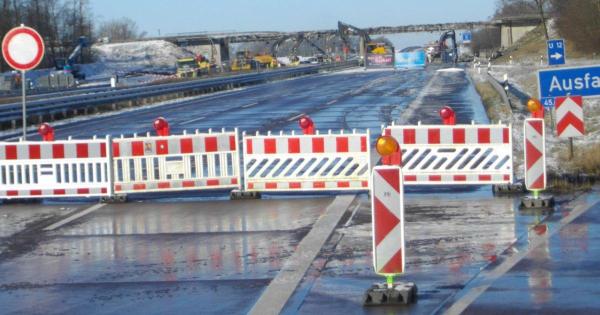
A key transport route in Germany will be temporarily closed to traffic. Planned closures of the A7 motorway in Hamburg will take place over four weekends, forcing detours for heavy goods transport and transit traffic.
In the first half of the year, four full weekend closures of the A7 motorway are scheduled in connection with the construction of a noise protection tunnel in the Altona district and road infrastructure works. The closures will affect a key section between the Hamburg-Stellingen (26) and Hamburg-Heimfeld (32) interchanges.
A7 closure schedule – first half of 2026
According to the road infrastructure operator, the Autobahn A7 will be completely closed on the following dates:
• March 20–23, 2026
• April 17–20, 2026
• May 8–11, 2026
• June 12–15, 2026
Each closure will last approximately 55 hours, from Friday evening to early Monday morning. During this time, traffic on the affected section will be halted in both directions, and entry ramps will be closed in stages before the full closure begins.
❌ Transit traffic will be diverted via the Autobahn A1, Autobahn A21 and the federal road B205.
This route allows drivers to bypass Hamburg and rejoin the A7 in the Schleswig-Holstein region. The closures are part of a major A7 modernization project in Hamburg, including the construction of a noise protection tunnel in the Altona district. The project предусматривает expansion of the motorway to eight lanes, construction of a tunnel structure to reduce noise for residents, and modernization of road infrastructure and safety systems.
The A7 motorway is one of the most important transport corridors in Europe, connecting southern Germany with the north of the country, Denmark and Scandinavian countries. Therefore, any closure in the Hamburg area—especially near Elbe crossings—may cause significant disruptions to heavy goods traffic and increase travel times on international routes.
 by
by Antwerp: tunnel closed to traffic. Route changes for trucks
A key route in the Port of Antwerp will be closed. On Saturday, March 21, the Tijsmans Tunnel will be impassable for 15 hours, forcing changes to routes for trucks and dangerous goods transport.
According to road authorities, the tunnel will be closed on Saturday, March 21, from 06:30 to 21:30. The reason is urgent repair work on several expansion joints in the tunnel wall, which requires a complete closure in both directions. Local traffic and ADR transport between Ghent and the Netherlands in both directions will be diverted via the A12 motorway, the Zandvliet junction [11], and the Scheldelaan road (N101).
❌ Transit traffic will be diverted via the Antwerp ring road (R1) and the Kennedy Tunnel.
The Frans Tijsmanstunnel is located on the R2 route, the northern part of Antwerp’s ring road. The tunnel runs under the Kanaaldok dock within the port area and is located near the Liefkenshoek Tunnel. Unlike the Liefkenshoek Tunnel, the Tijsmans Tunnel is toll-free.
The structure is 820 meters long, and the maximum permitted vehicle height is 4 meters. The tunnel has ADR category A, meaning that under normal conditions it is open to vehicles transporting dangerous goods.
 by
by Catalonia blocked. Demonstrations cut off key routes
Drivers in Catalonia must expect serious disruptions. On Wednesday morning, March 18, protests led to road blockages, including on the A-2 and C-55, which may cause delays.
Drivers carrying out transport operations through Spain should be prepared for major disruptions in Catalonia. On Wednesday, March 18, protests have been taking place since the early morning hours, resulting in blockages of key roads in the region. According to information from local media and services, demonstrations are concentrated in central Catalonia and the Lleida area. Protesters are blocking roads, causing a complete halt or significant restriction of traffic. The protests are related to a teachers’ strike and include road blockades as a form of pressure.
Disruptions have been reported on the A-2 motorway, including sections between Lleida and Alpicat, as well as in the Soses and Alcarràs areas towards Lleida. In some places, access to the AP-2 motorway has also been cut off. Problems are also occurring on the C-55 (including in the Solsona and Clariana de Cardener areas), as well as on the C-25 towards Manresa. Additional disruptions have also appeared on local and regional roads, including the N-260 in the Seu d’Urgell area and the C-59 near Moià. The situation is dynamic, and the list of blocked sections may change throughout the day.
 by
by Mont Blanc Tunnel Night Closures – Schedule Through August 2026
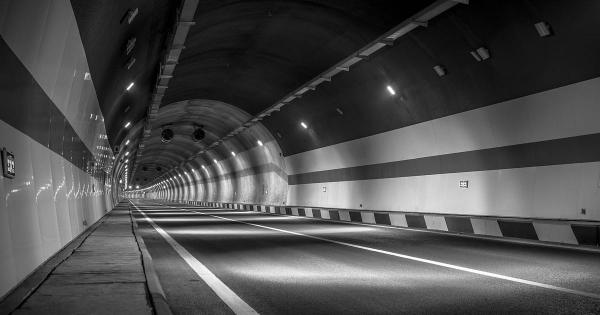
From today, night‑time traffic restrictions are in effect in the Mont Blanc Tunnel. The tunnel operator has published a forecast schedule of planned closures and alternating one‑way traffic from January through August 2026. These dates reflect maintenance and technical work and may be subject to change.
Full Night Closures of the Mont Blanc Tunnel
▪️12–13 January 2026 – 22:00 to 08:00 – Full closure
▪️9–10 February 2026 – 22:00 to 06:00 – Full closure
▪️19–20 February 2026 – 23:30 to 04:00 – Full closure (shorter duration)
▪️9–10 March 2026 – 19:00 to 06:00 – Full closure (earlier start)
▪️13–14 April 2026 – 22:00 to 06:00 – Series of night closures
▪️14–15 April 2026 – 22:00 to 06:00 – Series of night closures
▪️15–16 April 2026 – 22:00 to 06:00 – Series of night closures
▪️16–17 April 2026 – 22:00 to 06:00 – Series of night closures
▪️20–21 April 2026 – 22:00 to 06:00 – Series of night closures
▪️21–22 April 2026 – 22:00 to 06:00 – Series of night closures
▪️22–23 April 2026 – 22:00 to 06:00 – Series of night closures
▪️23–24 April 2026 – 22:00 to 06:00 – Series of night closures
▪️18–19 May 2026 – 22:00 to 06:00 – Series of night closures
▪️19–20 May 2026 – 22:00 to 06:00 – Series of night closures
▪️20–21 May 2026 – 22:00 to 06:00 – Series of night closures
▪️21–22 May 2026 – 22:00 to 06:00 – Series of night closures
▪️8–9 June 2026 – 19:00 to 06:00 – Full closure (earlier start)
▪️9–10 June 2026 – 22:00 to 06:00 – Full closure
▪️10–11 June 2026 – 22:00 to 06:00 – Full closure
▪️11–12 June 2026 – 22:00 to 06:00 – Full closure
▪️25–26 June 2026 – 22:00 to 06:00 – Full closure
▪️29–30 June 2026 – 22:00 to 06:00 – Full closure
▪️30 June–1 July 2026 – 22:00 to 06:00 – Full closure
▪️1–2 July 2026 – 22:00 to 06:00 – Full closure
▪️2–3 July 2026 – 22:00 to 06:00 – Full closure
Alternating One‑Way Traffic
On selected nights when full closure is not scheduled, the Mont Blanc Tunnel will operate under alternating one‑way traffic (one direction at a time):
▪️13–14 January 2026 – 22:30 to 06:00 – Alternating traffic
▪️14–15 January 2026 – 22:30 to 06:00 – Alternating traffic
▪️15–16 January 2026 – 22:30 to 06:00 – Alternating traffic
▪️10–11 February 2026 – 22:30 to 06:00 – Alternating traffic
▪️11–12 February 2026 – 22:30 to 06:00 – Alternating traffic
▪️12–13 February 2026 – 22:30 to 06:00 – Alternating traffic
▪️10–11 March 2026 – 22:30 to 06:00 – Alternating traffic
▪️11–12 March 2026 – 22:30 to 06:00 – Alternating traffic
▪️12–13 March 2026 – 22:30 to 06:00 – Alternating traffic
▪️24–25 June 2026 – 22:30 to 06:00 – Alternating traffic
These closures and alternating traffic periods arise from planned technical maintenance and safety work undertaken by the tunnel operator.
 by
by First Border Crossings Unblocked. Situation in the Balkans is Changing
After several days of truckers’ protests in the Balkans, the first signs of improvement have emerged. In North Macedonia, border crossings for freight transport have begun to be reopened, which may signal a gradual return of traffic on some international routes.
On Thursday, 29 January, in the evening hours, Macedonian transport associations announced the end of the blockades at some border crossings designated for freight transport. The decision was made following the European Commission’s announcement of a new visa strategy, which, according to the announcement, is intended to address the issues faced by professional drivers in the context of the 90/180-day rule in the Schengen area. After nearly four days of deadlock, a gradual normalization of freight traffic at North Macedonian border crossings is expected, including, among others: Deve Bair, Delčevo, Novo Selo, Dojran, Bogorodica, Medžitlija, Qafasan, Blace, Blato, and Stoenje – both for entry into and exit from the country.
At the same time, it should be emphasized that this information relates exclusively to the Macedonian side. The situation at other borders in the Western Balkans region, particularly in Serbia and at the borders with the Schengen area, remains unchanged and continues to cause significant disruptions for international transport.
List of Border Crossings Closed for Freight Traffic (as of 30 January)
⭕ Serbia – borders under blockade
⛔ Serbia – Hungary
– Horgoš – Röszke
– Kelebia – Kelebia
– Breg – Hercegszántó
⛔ Serbia – Croatia
– Batrovci – Bajakovo
– Šid – Tovarnik
– Bačka Palanka – Ilok
– Bezdan – Batina
⛔ Serbia – Romania
– Vršac – Moravița
– Đerdap (Iron Gates)
⛔ Serbia – Bulgaria
– Gradina – Kalotina
– Strezimirovci – Strezimirovtsi
– Vrška Čuka – Vrška Chuka
⛔ Serbia – North Macedonia
– Preševo – Tabanovce
⭕ Hungary – effects on the Schengen side
Closures or lack of freight clearance towards Serbia:
– Röszke
– Tompa
– Hercegszántó
✅⭕ North Macedonia – situation after the end of the protest
Freight traffic being restored/normalized:
– Deve Bair (border with Bulgaria)
– Delčevo (border with Bulgaria)
– Novo Selo (border with Bulgaria)
– Dojran / Star Dojran – Doirani (border with Greece)
– Bogorodica – Evzoni (border with Greece)
– Medžitlija – Niki (border with Greece)
– Qafasan (border with Albania)
– Blace (border with Kosovo)
– Blato (border with Albania)
– Stoenje (border with Albania)
ℹ️ The normalization of traffic is gradual – queues and limited capacity are possible.
 by
by Düsseldorf: Theodor-Heuss Bridge closed to heavy vehicles from February 1
From today (February 1, 2026), a full traffic ban applies on the Theodor-Heuss Bridge in Düsseldorf for vehicles with a gross vehicle weight exceeding 3.5 tonnes. This is another major crossing over the Rhine to face restrictions, following the earlier limitations introduced on the Josef-Kardinal-Frings Bridge.
The ban affects trucks, buses and other heavy commercial vehicles, with direct consequences for transit logistics and regional transport.
For vehicles over 3.5 tonnes, Düsseldorf authorities have designated official diversion routes:
Vehicles approaching from the west (NRW / left bank of the Rhine):
• from the Autobahnkreuz Kaarst interchange via the Autobahn-Viereck (A52 / A57 / A46),
• alternatively, within the city via the Rheinknie Bridge.
Vehicles approaching from the east:
• diversion via B8 – Danziger Straße using the A44,
• or via B1 (Kennedydamm / Rheinufertunnel) with crossing over the Rheinknie Bridge.
The city is informing drivers about the ban and diversion routes through road signage and variable message signs (VMS) placed along major traffic corridors.
Düsseldorf authorities introduced the restriction for structural safety reasons. The Theodor-Heuss Bridge, built in 1957, requires comprehensive protection against further degradation. Previous traffic loads — including regular crossings by vehicles weighing over 30 tonnes — have significantly accelerated wear on its load-bearing structures.