 by
by Slovenia: truck traffic ban on April 26 and 27
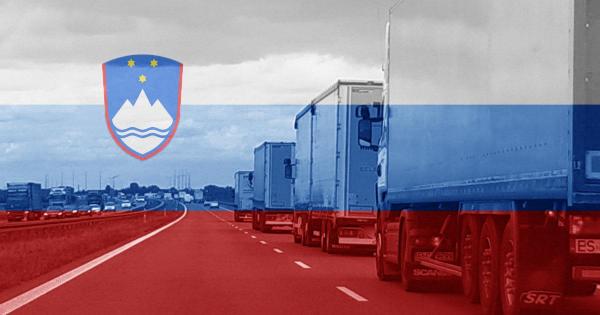
In Slovenia, truck traffic bans for vehicles with a gross vehicle weight of over 7.5 tonnes will be in force on April 26 and 27. The restrictions, related to Sunday and a public holiday, will apply from 08:00 to 22:00 and may cause transit disruptions, especially on the main international routes crossing the country.
In Slovenia, recurring traffic restrictions for trucks and vehicle combinations with a gross vehicle weight of over 7.5 tonnes will apply on April 26 and 27. They result from regulations imposing traffic bans on Sundays and public holidays and will be in force from 08:00 to 22:00. The bans apply nationwide, although in practice they mainly affect the main transit corridors running through Slovenia.
❌ The restrictions cover:
● Sunday, April 26 – the standard weekend traffic ban,
● Monday, April 27 – a ban related to the national holiday (Day of the Uprising of 1941).
During the ban, foreign-registered trucks with a gross vehicle weight of over 7.5 tonnes and a length exceeding 14 metres may not enter Slovenia. In practice, drivers must use parking areas and waiting zones near the border and wait until the restrictions are lifted.
❌ Exceptions: The restrictions do not apply, among others, to emergency transport, fuel deliveries, the transport of live animals, perishable goods, postal transport, humanitarian aid, and selected transport related to infrastructure maintenance. Combined transport operations are also permitted, as well as empty runs in certain cases.

 by
by Austria: Salzburg is increasingly restricting truck transit on regional roads
The Salzburg authorities are consistently restricting truck transit on regional roads by relying on local bans covering selected road sections. Although official data shows a decline in heavy vehicle traffic, for carriers it remains crucial to prove that a journey is local or destination-related.
The federal state of Salzburg is increasingly limiting transit truck traffic on regional roads. According to road administration data, between 2014 and 2024 the volume of truck traffic on category B and L roads declined, with the drop reaching around 10 percent in the Flachgau and Lungau regions. The regional authorities indicate that this is the result of transit bans for heavy goods vehicles introduced in recent years. The restrictions apply, among others, to the B95 Turracher Straße, B96 Murtal Straße, B99 Katschberg Straße, B156 Lamprechtshausener Straße and L101 Mattseer Landesstraße, which had been used by drivers as alternatives to motorways. These routes are now subject to transit bans, with an exception for local transport.
This system is not based on one general regulation for the entire region. The bans are introduced locally, both by regional authorities and district administrations, on the basis of § 43 of the Austrian Road Traffic Act (StVO). In practice, this means that the restrictions are section-specific and apply to particular stretches of road, often defined down to the exact kilometre. One example is the B156 Lamprechtshausener Straße, where the rules were introduced by administrative decision for a specific section between the municipalities of Bergheim, Anthering and Nußdorf. Such solutions show that Salzburg uses precise, local traffic management tools instead of one general ban.
Although official data indicates a decline in truck traffic, this is not equally noticeable everywhere in practice. In some municipalities, such as Unternberg in the Lungau region, local authorities point out that despite the existing restrictions, including allowing destination traffic only and a night driving ban, the volume of truck traffic has not decreased in a noticeable way. Driving on regional roads without a justified transport purpose may be considered unlawful transit, which entails the risk of penalties. It therefore remains crucial to demonstrate that the journey is destination-related, for example connected with loading or unloading in the area concerned.
 by
by France–Italy: Tenda Tunnel closed until April 25. Carriers left without an official detour
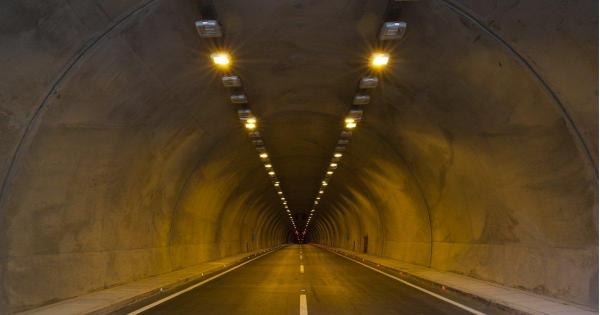
The full closure of the Tenda Tunnel is another problem for transport companies operating between France and Italy. The lack of passage in both directions and the absence of an official detour mean that routes must be reorganized, transit times will increase, and operating costs will rise.
Drivers and carriers transporting goods between France and Italy are facing serious disruptions. In mid-April, the Tenda Tunnel was completely closed to traffic, with no possibility of passing through in either direction.
According to a statement from the Italian road authority ANAS, the tunnel remains closed
❌ from the night of April 12 to 13 (around 11:00 p.m.)
❌ until the morning of April 25 (around 6:00 a.m.)
During this period:
❌ traffic is suspended in both directions
❌ there is no possibility of passing through the tunnel at any time.
The closure is due to roadworks on the French side, including works on mountain access roads with numerous hairpin bends. The works are being carried out continuously and require a full closure of traffic.
The most important information for the TSL industry: ❗ no official detour has been designated. In practice, this means the need to reorganize routes and divert transport operations to other Alpine crossings. For many routes, especially local ones, this results in significantly longer journeys and higher operating costs. The Tenda Tunnel is one of the key road connections between south-eastern France and north-western Italy. It has been under reconstruction for years, which has regularly resulted in traffic restrictions and temporary closures. However, the current closure is one of the most severe in recent times.
❌ This is not the end of the disruptions. According to industry information, another full closure of the tunnel is planned for mid-September 2026. At this stage, a detailed work schedule has not yet been published.
 by
by Will trucks get stuck at the border? Major traffic restrictions are being introduced in Náchod
Due to the construction of the Náchod bypass and the reconstruction of road II/303, major traffic restrictions are being introduced on the main route running through the town. The changes directly affect the Náchod (CZ) – Kudowa-Zdrój (PL) border crossing.
In the coming weeks, traffic on the I/33 road section will be gradually restricted, which will result in longer travel times and a risk of congestion in transit traffic.
❌ Until May 3, 2026, traffic will remain open in both directions, but with restrictions and always using only one lane.
❌ From May 4 to June 14, 2026, alternating one-way traffic controlled by traffic lights or manually by the police will be introduced. During this period, significant delays and long traffic jams should be expected, especially in heavy goods and transit traffic.
The Czech police are appealing to truck drivers, freight forwarding companies and all transit transport operators to consider alternative routes and other border crossings when planning transport operations, and to limit travel through Náchod wherever possible. This is intended to reduce the burden on the local road network and shorten queues at the border.
Throughout the entire investment period, a section of the local road on Kłodzka Street (Kladská ulice), in the area of the former customs crossing, will remain closed. The closure applies from the intersection with road I/33 (Polska Street) to the railway crossing and is of a long-term nature, with works scheduled to be completed by November 30, 2026. Traffic on this section has been completely suspended, and detours are being routed along roads parallel to I/33.
 by
by Cancelled sailings to Sweden – Unity Line switches to truck check-in without reservations
Unity Line has announced further cancellations of scheduled ferry sailings between Świnoujście and ports in Sweden (Trelleborg, Ystad) due to difficult weather conditions.
❌ Cancellations still scheduled for today, 3 February
According to the shipowner’s announcement, the following sailings have been cancelled due to adverse weather conditions:
19:20 – m/f Galileusz from Ystad
20:30 – m/f Jantar Unity from Świnoujście
In addition, for technical reasons, the following sailing of m/f Epsilon has been cancelled:
24:00 – from Trelleborg
❌ Planned cancellations on 4 February
01:30 – m/f Copernicus from Świnoujście
10:15 – m/f Jantar Unity from Trelleborg
15:00 – m/f Copernicus from Trelleborg
Due to storm conditions and the accumulation of heavy goods vehicles awaiting loading, Unity Line has decided to suspend the cargo reservation system in Poland until further notice. Trucks are being checked in according to the order of arrival at the terminal, and drivers should report directly to the Ferry Office.
✔️ All vehicles with confirmed reservations for cancelled sailings will be transported on other vessels within the Unity Line network, subject to weather conditions and available capacity.
✔️ The shipowner reserves the right to introduce further schedule changes and cancellations, which will be communicated in separate announcements.
✔️ Carriers and drivers should contact Unity Line offices at the terminals directly for the latest information on crossings and available transport options.
 by
by Night closures of the Mont Blanc Tunnel. Disruptions on the France–Italy corridor
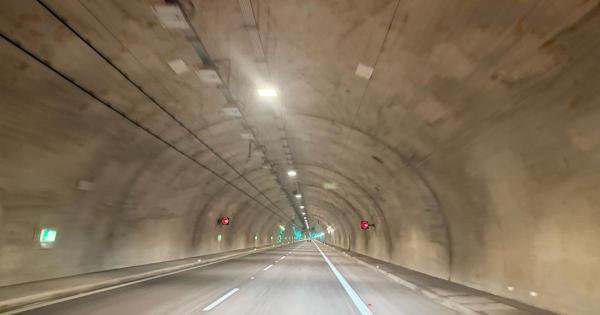
The Mont Blanc Tunnel operator has scheduled maintenance works for March and April 2026, which will result in night-time traffic disruptions. The restrictions may affect international transport on the France–Italy corridor, particularly for operations carried out during night hours.
Full tunnel closures (both directions)
❌ March:
◾ March 9 (Monday), 19:00–06:00
◾ March 19 (Thursday), 23:30–04:00
❌ April:
◾ April 13 (Monday), 22:00–06:00
◾ April 14 (Tuesday), 22:00–06:00
◾ April 15 (Wednesday), 22:00–06:00
◾ April 16 (Thursday), 22:00–06:00
During the above hours, transit through the tunnel will not be possible in either direction.
Alternating one-way traffic (22:30–06:00)
❌ March:
◾ March 10 (Tuesday)
◾ March 11 (Wednesday)
On these dates, traffic will operate alternately in one lane, which may cause delays, especially during periods of heavier truck traffic.
 by
by The Netherlands closes a tunnel on the route to Belgium
The Dutch infrastructure authority has scheduled a series of night closures of the Drechttunnel on the A16 motorway in 2026. The restrictions, related to maintenance and additional technical works, may affect the capacity of a key transport corridor connecting the port region of Rotterdam with the Belgian border and further with Antwerp and France.
The tunnel is an important part of the transport corridor linking the port area of Rotterdam with the Belgian border and further with Antwerp and France. Therefore, the restrictions may impact international freight transport and port-related traffic. Maintenance works are carried out four times a year and each time involve the closure of one tunnel tube in a given direction. During the closure, traffic is routed through the other tube.
Although at least one tube remains open, drivers should expect reduced capacity, possible congestion and longer travel times.
Key dates (March–April)
❌ Direction Breda:
▫️ March 2/3 (21:00–05:00)
▫️ March 4/5 (21:00–05:00)
▫️ March 17/18 (22:30–05:00)
▫️ March 24/25 (21:00–01:00)
▫️ March 30/31 (21:00–05:00)
▫️ March 31/April 1 (21:00–05:00)
▫️ April 7 (21:00–00:00)
▫️ April 29/30 (21:00–05:00)
▫️ April 30/May 1 (21:00–05:00)
❌ Direction Rotterdam:
▫️ March 3/4 (21:00–05:00)
▫️ March 5/6 (21:00–05:00)
▫️ March 16/17 (21:00–01:00)
▫️ April 1/2 (21:00–05:00)
▫️ April 2/3 (21:00–05:00)
▫️ April 8/9 (23:00–02:00)
▫️ April 17 (21:00–00:00)
Additional closures are also planned in May, September and December.
by Belgium: night closures between E25 and E40 in Liège starting today. Disruptions for several nights
For the next few nights, an important connection between the E25 and E40 motorways in Liège will be closed. The disruptions will affect the A602 tunnel ring road, and traffic will be diverted to designated detours.
Due to maintenance works, the connection between the E25 and E40 motorways running through the A602 tunnel ring road will be closed for five consecutive nights.
The section between the Avroy/Laveu interchange (No. 35) and Chênée interchange (No. 39) will be completely closed in both directions from 22:00 to 06:00 on the following nights:
◾ March 9–10
◾ March 10–11
◾ March 11–12
◾ March 12–13
Access to this section will begin closing gradually from 20:30, while the road is expected to reopen from 05:00.
During the closure, signposted diversion routes will be in place.
❌ Route S1 – for vehicles travelling from Loncin:
A604 → N617 → Fragnée and Fétinne bridges → N633 → N30 → N601 (Quai des Ardennes – Boulevard de l’Ourthe) → towards E25/A26 in the direction of Luxembourg.
❌ Route B – for vehicles travelling from E25/A26 from the direction of Luxembourg:
N30 → N90 (Meuse river quays) → E25/A25 motorway → Cheratte interchange (E25/A25–E40/A3).
To make the most of the night closures and carry out a wider scope of maintenance works, traffic restrictions may also be extended to neighbouring sections:
• between Embourg and Chênée,
• between the Loncin interchange and Avroy/Laveu.
 by
by New vignette rates in Latvia. Trucks will pay more
New road toll rates for heavy transport are now in force in Latvia. The changes took effect on March 1 and apply to vehicles with a gross vehicle weight exceeding 3.5 tonnes. The new regulations link the vignette price to the vehicle’s emission class, while the network of roads subject to the toll has also been expanded.
The new rules make the road charge for trucks over 3.5 tonnes dependent on the engine emission class. For zero-emission vehicles the vignette is free of charge, while for other emission classes the rates have been increased. The change is intended to align the toll system with climate policy and gradually promote vehicles with lower emissions.
The amendment has also expanded the network of roads subject to the toll. In addition to the main national roads, the vignette now also applies on selected regional roads. This solution is intended to limit the practice of carriers bypassing toll sections by using alternative routes to avoid paying charges.
At the same time, the legislator introduced exemptions for certain road users. Farmers have been exempted from the obligation to purchase a vignette for nine months of the year. This means they are required to pay only during the winter months – December, January and February. As a result, the 270-day vignette has also been removed from the system.
Preferences have also been provided for large families and families of re-emigrants, who can purchase a vignette with a 50% discount for one commercial vehicle with a permissible gross weight from 3 to 3.5 tonnes, provided it is purchased for 30 days or one year.
Changes concerning lighter commercial vehicles with a GVW of up to 3.5 tonnes have been postponed. Toll increases for this category will only enter into force on January 1, 2027, in order to limit the impact of the new regulations on small businesses.
The vignette system in Latvia covers trucks using state roads and constitutes one of the main sources of financing for the maintenance and development of road infrastructure in the country. For carriers performing transport through Latvia, this means the need to take the new rules into account when planning transport costs.
 by
by France: ELO mandatory for trucks travelling to the United Kingdom from April
From April 20, 2026, France will introduce a mandatory ELO system for trucks crossing the border with the United Kingdom. A single barcode will contain all the data required for clearance at the so-called smart border.
Information about the introduction of the mandatory ELO system (Obligatory Logistics Envelope) for the transport of goods between the European Union and the United Kingdom via the so-called smart border in France has been published on the website of the French customs administration Direction générale des douanes et droits indirects, available at douane.gouv.fr. The solution mainly concerns road transport handled through the ports of Calais and Dunkirk and through the Channel Tunnel, which are used by the majority of trucks travelling between the continent and the United Kingdom.
The ELO system was launched in spring 2025 as part of the French Smart Border system introduced after Brexit to speed up truck clearance. Its purpose is to simplify border procedures by collecting all required information and declarations in a single barcode. This code contains data related to the transport and customs documents that are scanned when crossing the border.
According to information from the French customs administration, the use of the ELO system will become mandatory from April 20, 2026. This means that all trucks – both loaded and empty – will have to present a single ELO barcode when crossing the so-called smart border between France and the United Kingdom. The requirement will apply to import, export and transit operations.
Access to the ELO application is available via an individual account on the douane.gouv.fr portal. After logging in, the user can search for the application in the system and create an ELO document that generates the barcode required during the clearance process. The French customs administration also recommends regularly checking the website providing information about the status of digital services, where announcements about potential technical issues with online systems are published. In the event of irregularities, operators should first contact the transport carrier – depending on the case, the ferry or rail operator handling the transport.