
 by
by Czech Republic: Truck driving ban on October 28
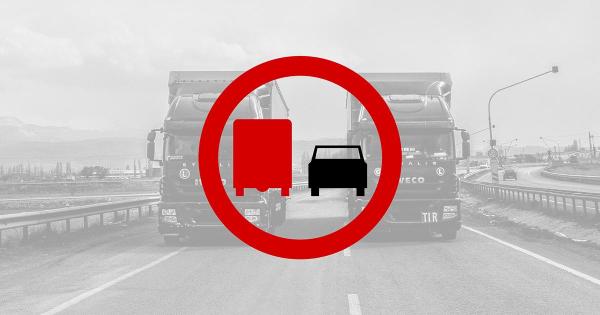
On Tuesday, October 28, the Czech Republic celebrates Independence Day (Den vzniku samostatného československého státu). On this day, a general ban on the movement of trucks and combinations with a maximum permissible weight over 7.5 tonnes applies.
According to Czech regulations, truck traffic restrictions apply year-round on Sundays and public holidays between 13:00 and 22:00. In practice, this means that for the upcoming weekend and the beginning of the week, drivers need to consider the following restrictions:
October 26 (Sunday) – ban in effect from 13:00 to 22:00
October 27 (Monday) – no ban
October 28 (Tuesday, Independence Day) – ban in effect again from 13:00 to 22:00
Vehicles exempt from the restrictions include, among others:
▫️ vehicles used for combined transport (from the sender to the nearest terminal or from the terminal to the recipient)
▫️ vehicles transporting seasonal crops
▫️ vehicles used for construction, maintenance, or repair of roads
▫️ vehicles transporting perishable goods (according to the ATP agreement, if they constitute more than half of the load)
▫️ vehicles transporting animals or fuel necessary for the operation of filling stations
▫️ vehicles performing loading or unloading of airplanes, ships, or trains within a 100 km radius
▫️ vehicles transporting postal consignments
▫️ vehicles traveling empty in connection with the above transports
▫️ vehicles used in natural disaster situations
▫️ vehicles belonging to the military, police, or fire services
▫️ vehicles transporting temperature-sensitive chemical substances
▫️ vehicles used for driver training
 by
by Italy introduces a truck overtaking ban on the A1 motorway – 90 km of restrictions
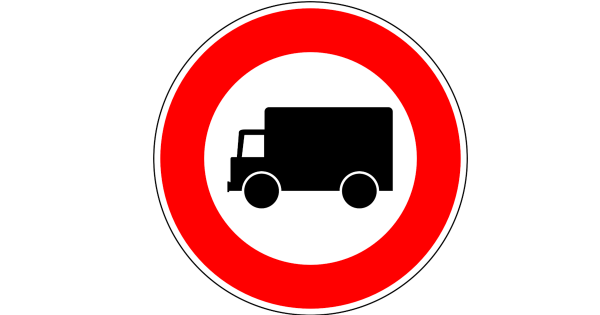
Starting from November 3, 2025, a new experimental overtaking ban for heavy goods vehicles with a maximum permissible weight exceeding 12 tonnes will apply on the A1 Milan-Naples motorway. The restriction covers a section of approximately 90 kilometres between Incisa-Reggello and Chiusi in both directions.
This is one of the key stretches of the A1, connecting northern Italy with Rome and the south of the country. On this segment between Incisa-Reggello and Chiusi, heavy vehicle traffic is significantly higher than the average on the Autostrade per l’Italia network. In addition, the road’s topography and two-lane layout, according to the motorway operator, contribute to the occurrence of hazardous situations during overtaking manoeuvres.
The A1 overtaking ban is a pilot measure. Autostrade per l’Italia aims to assess whether implementing it on two-lane sections such as the one between Incisa-Reggello and Chiusi can improve traffic flow and safety – particularly by reducing congestion and collisions related to truck overtaking on inclines. The implementation has been agreed upon with the Highway Police and relevant prefectures. Local authorities within the affected area have been officially informed about the project’s objectives. The police have announced intensified controls along the entire stretch between Incisa-Reggello and Chiusi to ensure compliance with the new regulation.
The operator reminds drivers that overtaking bans for trucks already exist on around 22% of the network managed by Autostrade per l’Italia – mainly in tunnels and on sections with significant elevation changes. If the pilot project on the A1 between Incisa-Reggello and Chiusi yields positive results, similar measures may be extended to other motorway sections with comparable characteristics.
 by
by Austria reinstates a truck ban for vehicles over 7.5 tonnes on the B320 Ennstal Straße
With the installation of new road signs on October 27, 2025, the entry ban for trucks with a maximum permissible weight over 7.5 tonnes on the B320 Ennstal Straße has come back into effect.
After several months of unrestricted access, the Austrian B320 Ennstal Straße once again faces limitations for heavy goods vehicles. On October 27, 2025, the Liezen district authorities announced the reinstatement of the truck driving ban for vehicles over 7.5 tonnes GVW between 05:00 and 22:00, with exemptions for local delivery and destination traffic, as well as for drivers residing in the regulated areas. In addition, the nighttime ban on trucks over 3.5 tonnes (22:00-05:00) remains in force on this section.
The new regulations were implemented together with the installation of traffic signs, in accordance with the decree issued by the District Governor of Liezen on October 7, 2025 (BVBl. No. 54/2025). The exemptions include municipalities within the Liezen district and selected areas of the neighbouring districts in Styria, Upper Austria, and Salzburg.
The restrictions return following the decision of the Austrian Constitutional Court (VfGH) on June 25, 2025, which annulled the previous ban in force since 2019. According to the judges, the manner in which the earlier regulation had been announced – particularly the lack of clear information on the exceptions on road signs – violated traffic law requirements. The Court’s ruling temporarily allowed renewed truck transit through the Enns Valley. However, local authorities had announced the swift introduction of an amended regulation, which has now been implemented.
Full details of the exemptions can be found in §2 of the referenced decree – the legal basis for the current road signs.➡CLICK
 by
by France: Truck Traffic Ban in the Pas de l’Escalette Tunnel on the A75. Detours Announced
The Prefect of the Hérault department has introduced an immediate ban on heavy goods vehicle traffic in the Pas de l’Escalette tunnel on the A75 motorway. The restriction remains in force until further notice.
The decision was prompted by a power failure that disabled the tunnel’s ventilation and smoke extraction systems. For safety reasons, traffic involving heavy trucks, vehicles transporting hazardous materials, and buses has been completely suspended in both directions.
Two mandatory turning points have been designated for heavy vehicles:
▫️ Northbound (toward Millau) – Exit 52 Lodève Nord (Hérault department)
▫️ Southbound (toward Montpellier) – Exit 42 Sévérac-le-Château (Aveyron department)
Authorities urge all transport operators to strictly comply with the ban and use only the designated detour routes specified in the official traffic management plan. Drivers are also reminded not to use local roads, which are unsuitable for heavy vehicles.
 by
by New Weight Restrictions on National Roads No. 7 and No. 64 in Hungary
Starting Monday, November 3, permanent weight limits for heavy goods vehicles will come into effect on two major routes in western Hungary – National Road No. 7 and National Road No. 64.
National Road No. 7
Entry is prohibited for vehicles with a maximum permissible gross weight exceeding 7.5 tons, except for local traffic.
– The restriction applies to the following sections:
• The area around Szabadbattyán and Polgárdi (km 78+459 – 84+395),
• From the M7–Polgárdi junction to the center of Lepsény (km 87+772 – 94+095).
National Road No. 64
Entry is prohibited for vehicles with a maximum permissible gross weight exceeding 22 tons, except for local traffic.
The restriction covers the section between Mátyásdomb and the roundabout at Road No. 7 (km 25+060 – 37+524).
According to the road authority’s announcement, the decision aims to reduce the phenomenon of heavy vehicles diverting from the M7 motorway onto lower-category roads and to mitigate the negative impact of transit traffic on residents of the Fejér region.
 by
by Bulgaria: Complete Closure of the Giurgiu–Ruse Bridge. Trucks to Stop for 24 Hours
Truck drivers should prepare for significant disruptions at the Bulgarian-Romanian border. The Giurgiu-Ruse Bridge (also known as the Friendship Bridge over the Danube) will be completely closed to traffic on November 4, 2025, due to ongoing large-scale renovation works.
According to the official announcement:
⭕ Passenger car traffic will be restricted between 09:00 and 21:00.
⭕ Heavy goods vehicles with a gross vehicle weight exceeding 3.5 tons will be prohibited from crossing for a full 24 hours – from 09:00 on November 4 to 09:00 on November 5.
During this period, truck drivers will be able to use designated parking areas and rest facilities in the regions of Ruse, Veliko Tarnovo, Yambol, and Haskovo. The renovation of the Giurgiu-Ruse Bridge is part of a broader program to modernize road infrastructure between Bulgaria and Romania.
As the Danube crossing serves as one of the key transit points for international transport between Southern and Central Europe, drivers are advised to take the closure into account when planning their routes and to consider alternative border crossings, such as Vidin-Calafat.
 by
by Polish and Lithuanian Trucks Banned from Entering Belarus for Over Two Years
The Council of Ministers of the Republic of Belarus has introduced a new road traffic restriction, detailed in a regulation published on November 1, 2025, on the National Legal Internet Portal (6-1/55394).
The regulation imposes a ban on the use of the territory of the Republic of Belarus by:
❌ Trucks and tractor units registered in EU member states,
❌ Trailers and semi-trailers registered in the Republic of Poland and the Republic of Lithuania,
❌ Passenger cars registered in Poland that carry out international transport operations under individual waybills or CMR documents.
The ban also applies to trailers and semi-trailers registered in Poland and Lithuania, even if they are hauled by tractor units from other countries. Violation of the ban concerning trailers/semi-trailers from Poland and Lithuania, as well as passenger cars from Poland, is regarded as performing international road transport within the territory of Belarus without the required permit and entails liability under administrative offense regulations.
In the event of violations, Belarusian authorities will direct vehicles to leave the country via the border with Russia or to the nearest customs checkpoint.
The regulation entered into force on the date of its publication and will remain in effect until December 31, 2027.
The full decree is available HERE
 by
by Calculator of Fines for Drivers’ Driving and Rest Time in Germany
In Germany, a calculator is available for determining fines related to violations of driving and rest time regulations applicable in 2025. The tool allows drivers and transport companies to quickly calculate penalties arising from road safety rules and EU social regulations.
Fines in Germany are calculated separately for the driver and the transport company. For example:
➡️ Reducing the daily rest period by more than 3 hours results in a fine of €60 per each commenced hour for the driver and €180 for the transport operator.
➡️ Exceeding the daily driving time by more than 2 hours – €60 per each commenced 30 minutes for the driver and €180 for the company.
➡️ Failure to present the driver card during inspection – from €75 up to €250, if this prevents data verification.
German authorities emphasize that enforcing these rules aims to reduce driver fatigue, which remains one of the leading causes of road accidents.
The calculator also takes into account the changes introduced by the EU Mobility Package, including the obligation to equip all vehicles engaged in international transport with second-generation smart tachographs (Smart Tacho Version 2) by the end of 2025. These devices automatically record, among other things, border crossings and vehicle locations, enabling quick detection of irregularities.
The calculator and detailed information are available HERE❗
 by
by The Netherlands Launches a New Toll System
Tolltickets has begun the process of obtaining approval to provide services under the planned road toll system for trucks in the Netherlands. In early October, the company signed an agreement with RDW, opening the way to becoming an official service provider within the European Electronic Toll Service (EETS) framework.
The new toll system is scheduled to launch on July 1, 2026, when truck owners will be required to pay for every kilometer driven on nearly all motorways, as well as certain provincial and urban roads. The rates will depend, among other factors, on the vehicle’s weight and emission class — the lighter and more environmentally friendly the truck, the lower the toll. RDW emphasizes that expanding the number of service providers is key to ensuring the smooth implementation of the system.
Tolltickets, a wholly owned subsidiary of Kapsch TrafficCom, is one of the global leaders in electronic tolling services. The company operates in more than 50 countries and serves over 500,000 customers worldwide.
The Netherlands is a central hub for European freight transport. We are pleased to offer our customers a solution that enables seamless travel between countriessaid Quentin Couret, Managing Director of tolltickets GmbH.
Tolltickets is the fifth operator to join the approval process in the Netherlands. Previously, RDW had signed agreements with Axxès, Telepass, Toll4Europe, and TotalEnergies. This will allow carriers to use a single onboard unit and receive one invoice for multiple countries. At the same time, a national operator, NedLinq, is also active on the market, though it offers services exclusively within the Netherlands.
With the launch of the new toll system, the Eurovignette will be abolished, and the existing road tax will be eliminated for vehicles up to 12 tons. Heavier trucks (over 12 tons) will benefit from significantly reduced tax rates. The Dutch government and the transport and logistics sector expect that competition among service providers, along with the advantages of the EETS system—such as fewer onboard devices and simplified billing—will lead to more efficient and cost-effective operations for transport companies.
 by
by Modernization of Tunnels on Spain’s A-66: Detours and Night Closures in Asturias
Major modernization works are underway on the A-66 motorway in Asturias, focusing on the Ángel Uriel and El Padrún tunnels. The goal of the project is to improve safety and air quality inside the tunnels through the installation of new ventilation systems. During the works, drivers should expect traffic disruptions and designated detours.
The Ministry of Transport and Sustainable Mobility announced that the modernization includes the installation of new fans and power cables, which will enhance traveler safety, particularly in the event of a fire. The project is being carried out under the Recovery, Transformation and Resilience Plan (PRTR), financed by the European NextGenerationEU funds. The total budget amounts to €7.26 million.
Due to the installation of ventilation equipment in the El Padrún tunnel, night closures have been scheduled:
❌ November 3 and 4 – closure of the León-bound tube, from 22:00 to 07:00
❌ November 5 and 6 – closure of the Oviedo-bound tube, also from 22:00 to 07:00
To maintain traffic flow on the A-66 motorway, the following detours have been arranged:
❌ Direction León:
Traffic will be diverted to the N-630 road, between exit 35 and the Cardeo junction.
For local connections between Olloniego and Mieres, an alternative route is available via the AS-116 road, from which drivers can access the AS-I mining motorway.
❌ Direction Oviedo:
Between km 41 and km 43, traffic will be shifted to a single carriageway, using existing crossovers between the lanes.
These works are part of Spain’s ongoing effort to adapt its tunnel network to current EU safety standards. The investment aims to improve driving conditions and reduce the risk of serious incidents in tunnel infrastructure that plays a vital role in regional transport.
Las noches del 3, 4 y 5 de noviembre se producirán afectaciones al tráfico en el túnel de El Padrún (A-66, Asturias) para poder colocar los nuevos ventiladores que mejorarán la calidad del aire y aumentarán la protección en caso de incendio.
ℹ️ https://t.co/07zdYkwn3H pic.twitter.com/xowO92FweL