Easter truck driving bans in Poland. One provision makes the difference
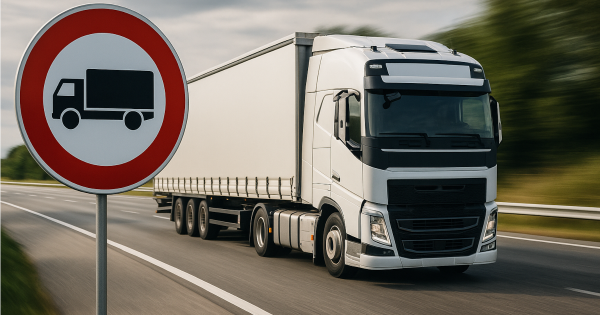
During the Easter period in Poland, additional traffic bans apply to trucks with a gross vehicle weight exceeding 12 tonnes. The restrictions will cover three holiday days in 2026; however, the regulations provide for numerous exemptions, particularly important for international transport.
In 2026, the Easter bans will apply on the following dates:
● April 4 (Holy Saturday) – from 18:00 to 22:00
● April 5 (Easter Sunday) – from 08:00 to 22:00
● April 6 (Easter Monday) – from 08:00 to 22:00
The restrictions apply to truck traffic on roads throughout the entire country.
However, Polish regulations provide for a number of exemptions from the ban. The restrictions do not apply, among others, to vehicles transporting perishable food products, live animals, or vehicles involved in rescue operations. Of particular importance for international transport are also the exemptions concerning vehicles crossing the state border.
The ban does not apply, among others, to:
✅ vehicles returning from abroad in order to complete a road transport operation or to reach the consignee of the transported goods located in Poland.
In practice, this means three possible scenarios:
1. the vehicle returns from abroad for unloading at a consignee in Poland,
2. the vehicle returns with cargo to the company’s base, where the transport operation is suspended for the holiday period,
3. the vehicle returns empty to the base after completing a transport operation abroad.
In each of these situations, travel during the ban is permitted, as the purpose is to complete the transport operation within the territory of Poland.
✅ The regulations also allow the movement of vehicles that entered the territory of Poland outside the ban hours, within a radius of up to 50 kilometres from the border crossing point. This exemption also covers vehicles waiting at the border to leave Poland.
50 km from the border – how does this provision work?
This exemption does not allow unrestricted travel deeper into the country. It only permits reaching the nearest parking location or transport infrastructure within the 50 km zone from the border.
In practice, this most often means the possibility to:
● reach a parking area or stopping place,
● reach a terminal, logistics centre, or warehouse,
● return to the company’s base, if it is located within this zone.
This provision was introduced so that a driver who has legally crossed the border before the ban begins does not have to stop directly at the border crossing.
✅ The regulations also provide that exemptions for certain types of transport apply to empty vehicles travelling to pick up a load or returning after unloading.
Other exemptions and the detailed list of perishable goods
Latest Posts
 by
by Easter truck driving bans in Poland. One provision makes the difference
During the Easter period in Poland, additional traffic bans apply to trucks with a gross vehicle weight exceeding 12 tonnes. The restrictions will cover...
 by
by Romania will shut down the toll system. Drivers will not be able to buy a vignette
CNAIR has announced a planned technical interruption that will affect the ability to purchase vignettes and pay road tolls in Romania.On Wednesday, April 8,...
by Major disruptions ahead in Germany – A2 motorway closed, A4 with night closures
April brings significant disruptions on German motorways. According to Die Autobahn GmbH des Bundes, the A2 motorway in Dortmund will be completely closed...