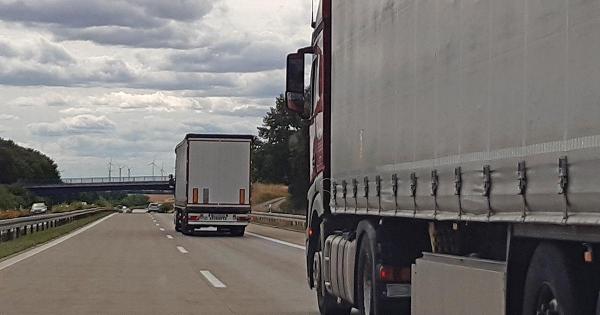
Honey and Driving Bans in the EU. Where You Can Drive on Sundays and Public Holidays
Under EU regulations, honey is generally not classified as a commodity eligible for exemptions from traffic bans. Although it is a food and agricultural product, it is neither considered perishable nor classified as an ATP good.
In practice, this means that in the vast majority of EU countries, truck driving bans also apply to the transport of honey, regardless of its form, packaging, or method of transport. For enforcement authorities, honey remains a standard commercial cargo. Arguments related to its natural origin, preservative properties, or classification as food are irrelevant when assessing the legality of transport during restricted periods.
France and Italy – the only real exceptions
Within the EU, only France and Italy stand out, each applying a distinct and precise approach. In France, honey has been administratively classified as a food product treated as perishable for the purposes of traffic ban regulations. As a result, its transport may benefit from exemptions, including on Sundays and public holidays. This exemption is applied in practice and respected by enforcement authorities, provided that:
- • the transport genuinely concerns honey,
- • the documentation is clear and unambiguous,
- • the nature of the cargo raises no doubts during inspection.
In Italy, the scope of the exemption is much narrower. It applies exclusively to honey transported in bulk as a raw material intended for further processing, most commonly in barrels or IBC containers. Packaged honey, such as jars or other retail forms, does not benefit from any exemptions and remains subject to standard driving bans. Therefore, the admissibility of transport depends on the form of the cargo rather than the product itself.
Why honey does not qualify for most exemptions
Although honey is undeniably:
- • a food product,
- • an agricultural product,
- • a natural sweetener,
it is at the same time:
- • not an ATP commodity,
- • not a confectionery product,
- • not a perishable good,
- • not a processed food within the meaning of exemptions applied in many EU countries.
For this reason, it does not fall within categories such as “perishable food” or “ready-to-eat processed food,” which most commonly form the basis for exemptions from driving bans.
There is no room for simplification in the transport of honey. The legality of driving during restricted periods depends on:
- • the specific regulations of the country concerned,
- • how honey is classified under those regulations,
- • the form of the transported cargo,
-
• the consistency of transport documentation.
Apart from France and the strictly defined case in Italy, honey does not provide grounds for benefiting from exemptions to driving bans. In other countries, attempts to rely on general categories such as “food,” “agricultural products,” or “seasonal transport” are interpretative in nature and, in practice, depend on the assessment of enforcement authorities. Any other assumption carries a real risk of fines or enforced vehicle stoppage.
Up-to-date information on exemptions and derogations in individual EU countries is available on trafficban.com , in the “Exemptions” section assigned to each country.
Latest Posts
 by
by Belgium: night closures between E25 and E40 in Liège starting today. Disruptions for several nights
For the next few nights, an important connection between the E25 and E40 motorways in Liège will be closed. The disruptions will affect the A602 tunnel ring...
 by
by New vignette rates in Latvia. Trucks will pay more
New road toll rates for heavy transport are now in force in Latvia. The changes took effect on March 1 and apply to vehicles with a gross vehicle weight...
by France: ELO mandatory for trucks travelling to the United Kingdom from April
From April 20, 2026, France will introduce a mandatory ELO system for trucks crossing the border with the United Kingdom. A single barcode will contain all...